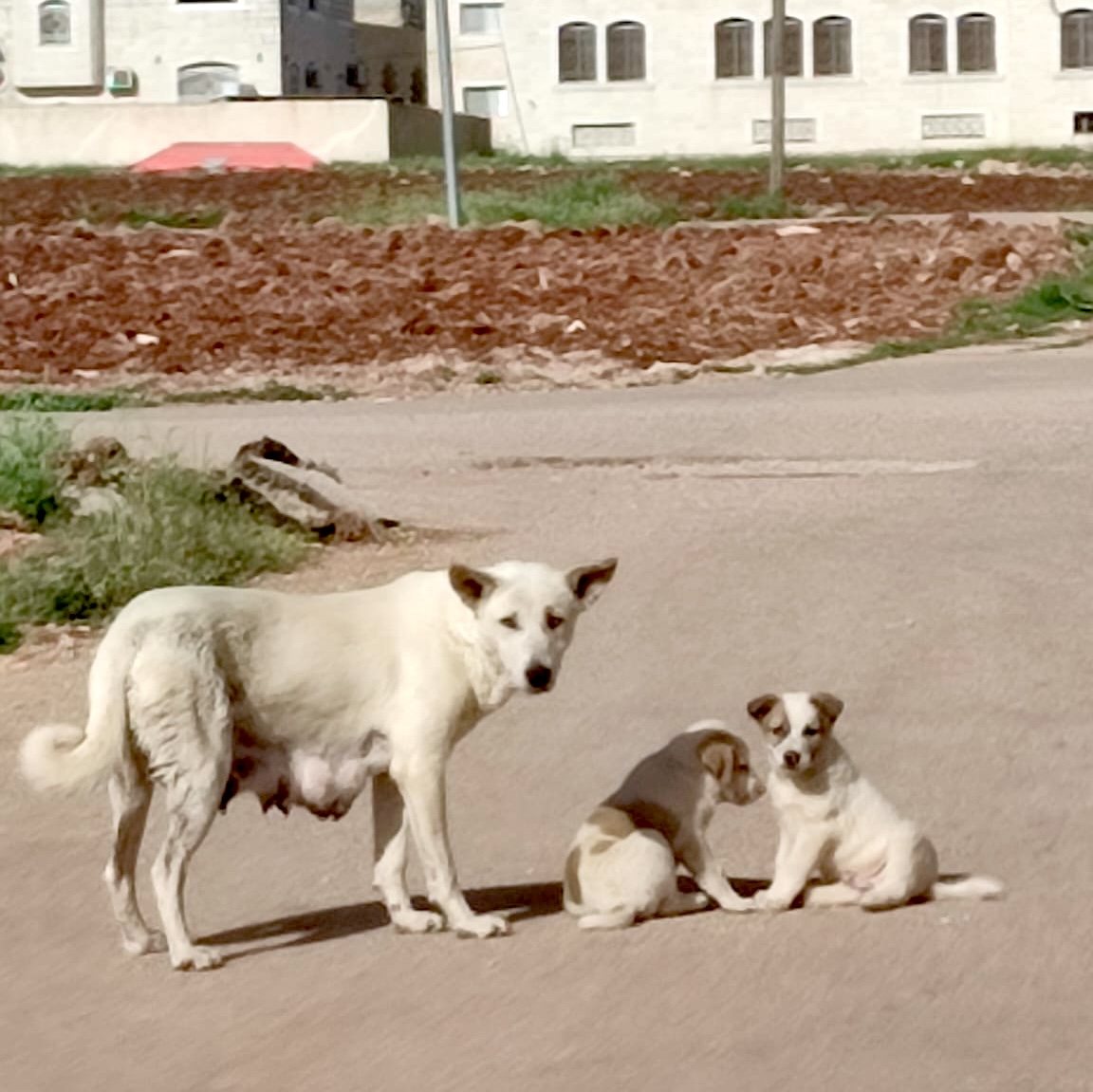
A First for Jordan: Our Research Team Publishes Peer-Reviewed Study on Stray Dogs
Al-Yarmouk’s research team has published the first peer-reviewed scientific study on stray dogs in Jordan — a milestone for evidence-based policy in the country.

Al-Yarmouk’s research team has published the first peer-reviewed scientific study on stray dogs in Jordan — a milestone for evidence-based policy in the country.
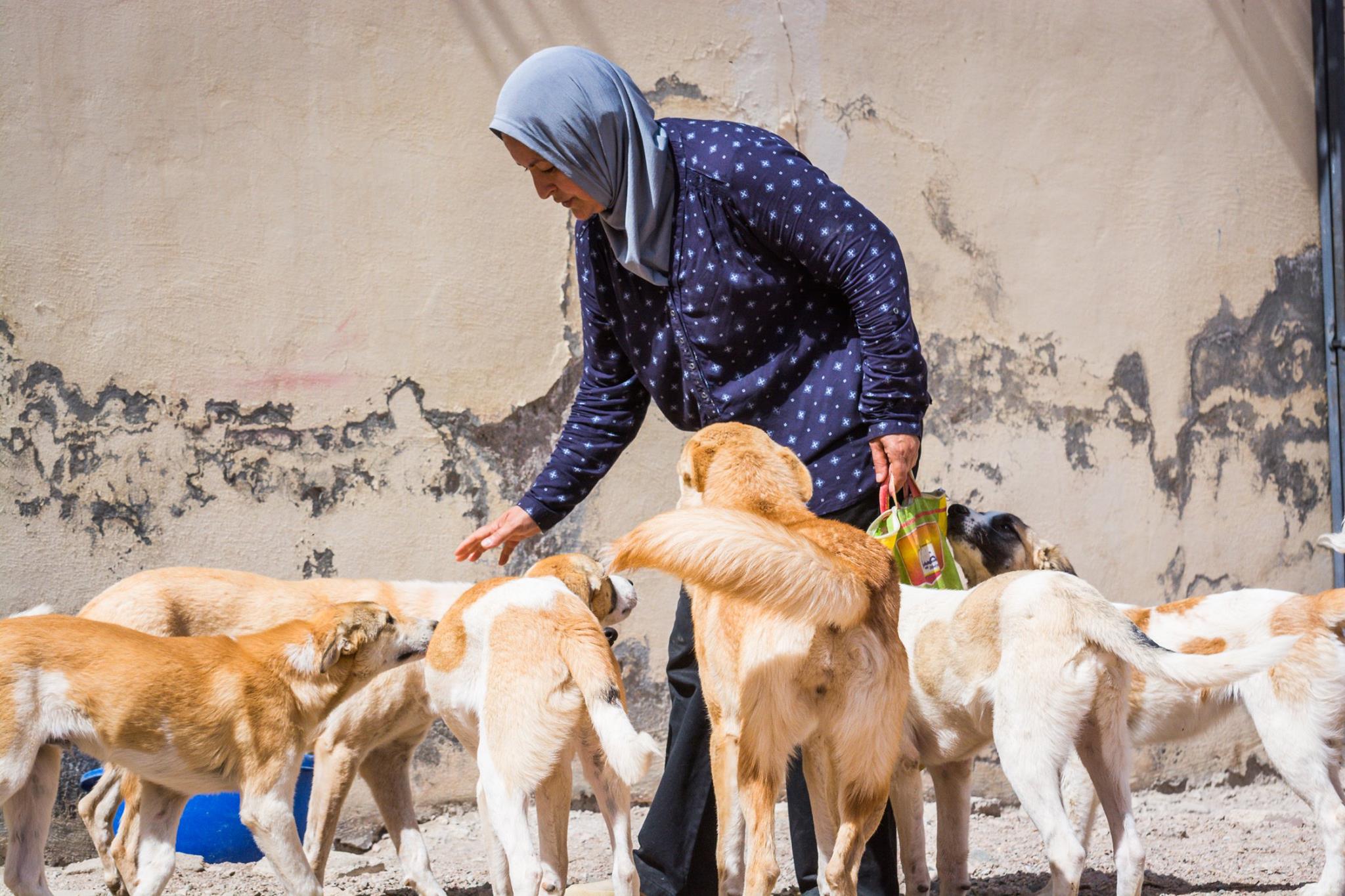
After years of fieldwork, we’ve reached a counterintuitive conclusion: the dogs you see on Jordan’s streets are not where the population is being made. Understanding the actual source matters — because it determines whether any sterilization program can succeed.
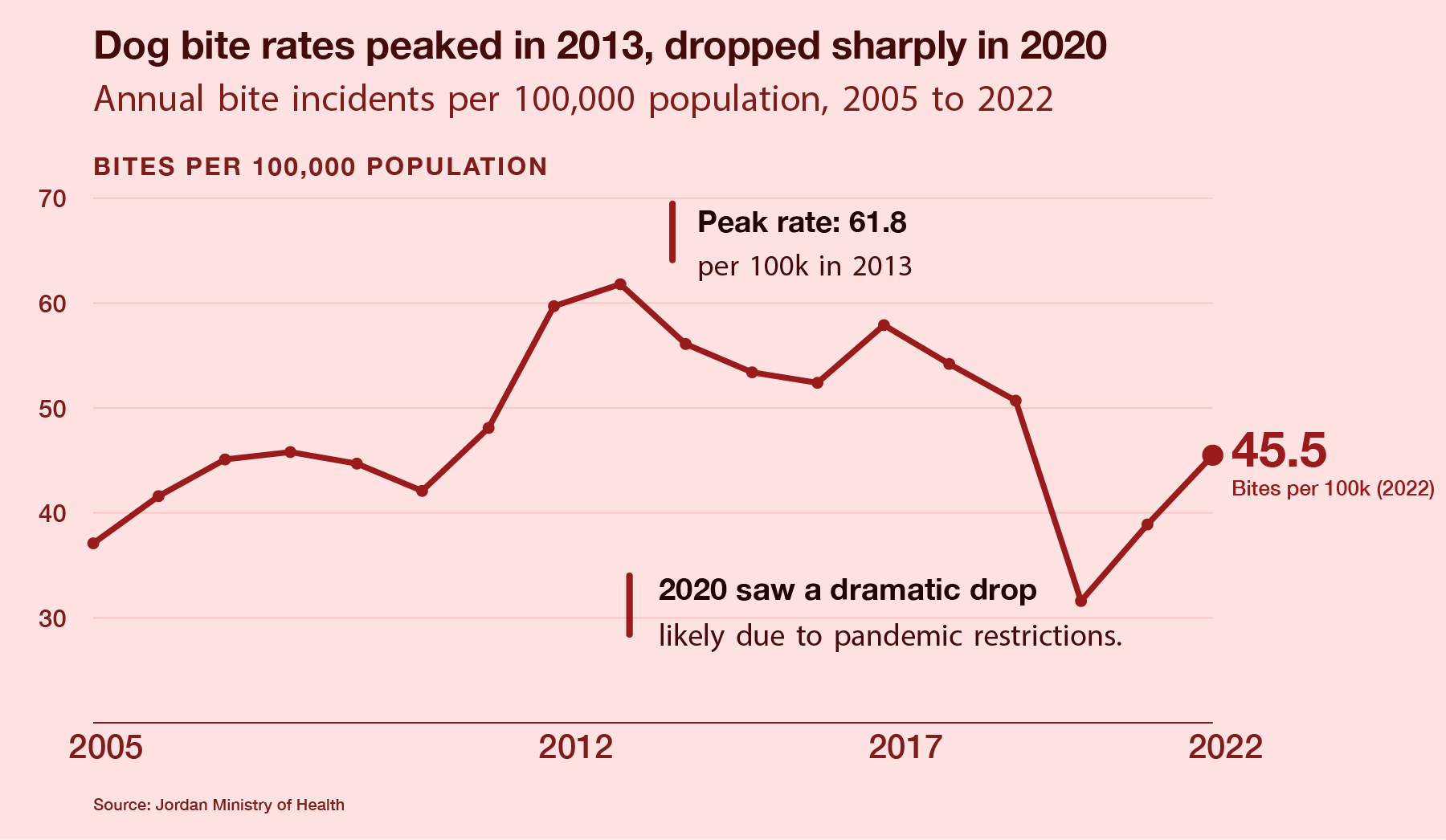
If stray dogs posed a rapidly growing threat to public safety, we would expect to see it in the Ministry of Health data. We don’t. Here’s what the numbers show.
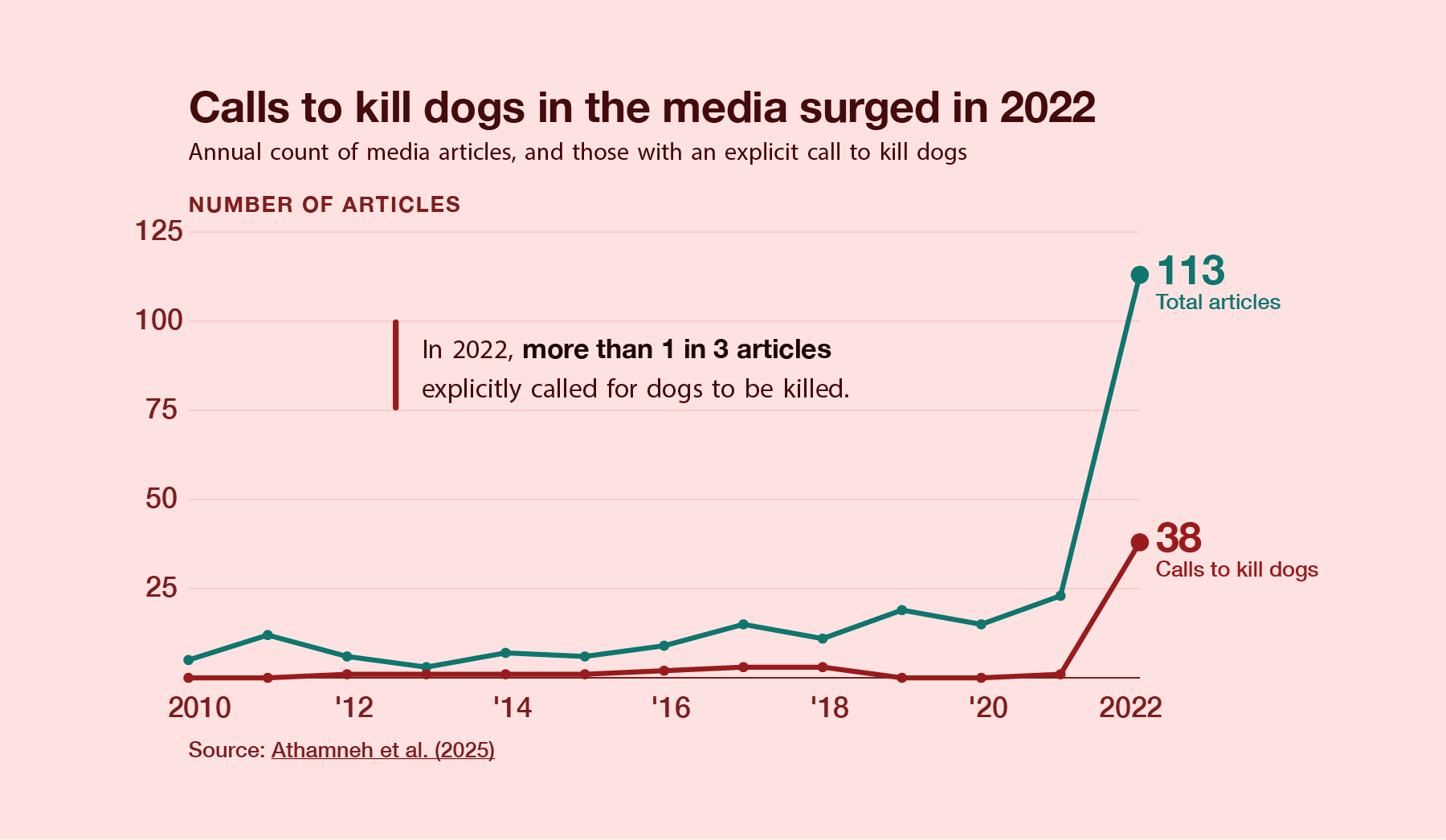
We analyzed 247 Arabic-language articles about stray dogs in Jordan from 2010 to 2022. Coverage was flat for a decade — then it wasn’t. Here’s what the pattern reveals.

Our published study answered one set of questions. It highlights another set we haven’t answered yet: how does the Jordanian public actually feel about stray dogs? Here’s the work ahead — and how partners and donors can help.
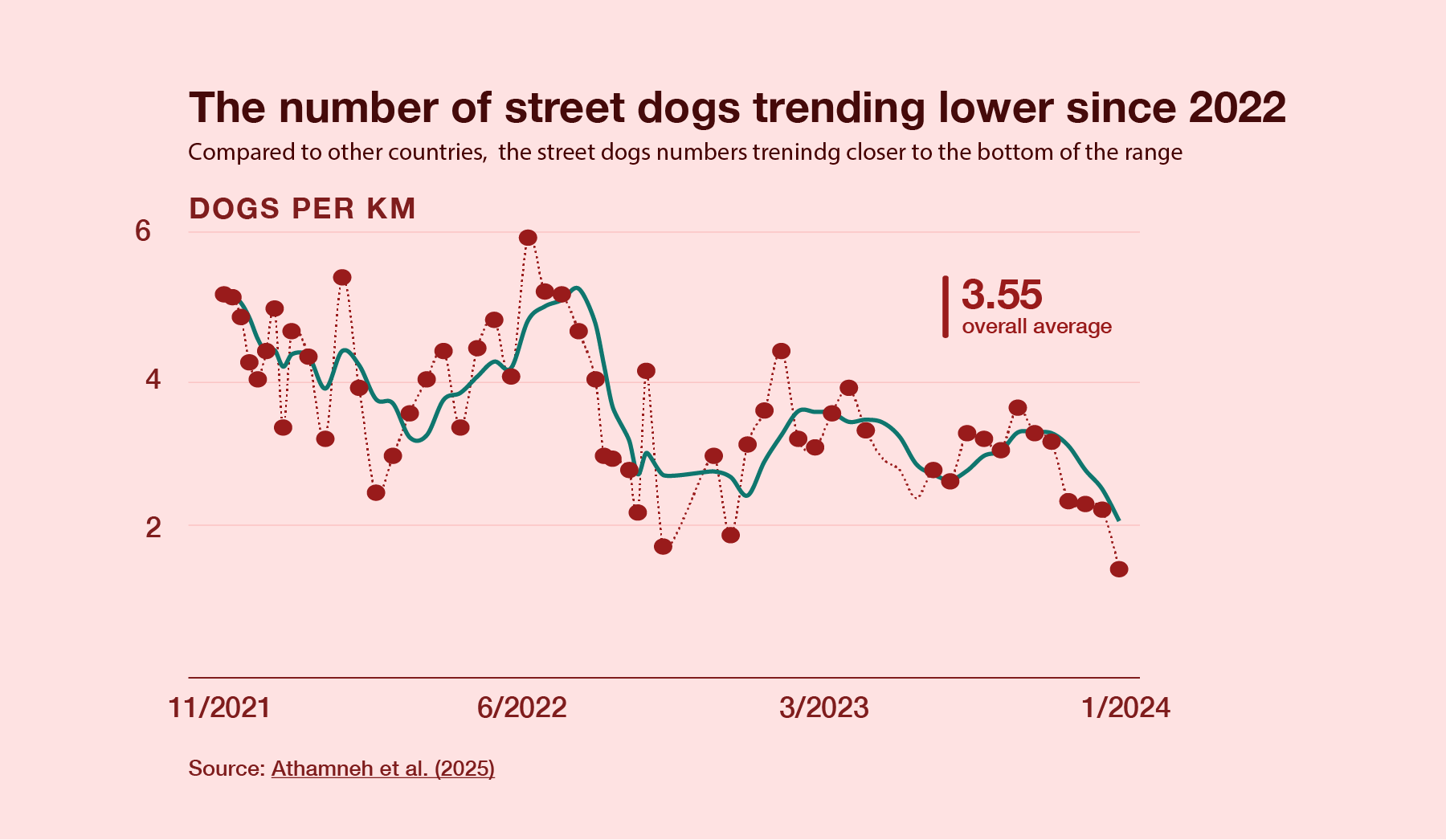
Since November 2021, our team has driven the same 25-kilometer route every two weeks, counting every stray dog we see. Here’s what the data say — and why the gap between perception and measurement matters for policy.

Al-Yarmouk runs a free spay/neuter program — but only for owned dogs. The choice is deliberate, and it reflects the most important lesson our years of fieldwork have taught us: targeting matters more than volume.

International animal welfare organizations are increasingly aware that cross-border work in places like Jordan can backfire. Here’s how we think about partnership — directly, and without dancing around the hard part.