Animal welfare organizations are sometimes asked why we don’t run a large-scale TNR program for street dogs. The question deserves a direct answer.
We are firmly committed to spay/neuter as a core welfare intervention. We run a free spay/neuter program for owned dogs — and that’s where our sterilization capacity is concentrated. The decision is not a compromise. It is the most defensible use of our resources given what our research shows.
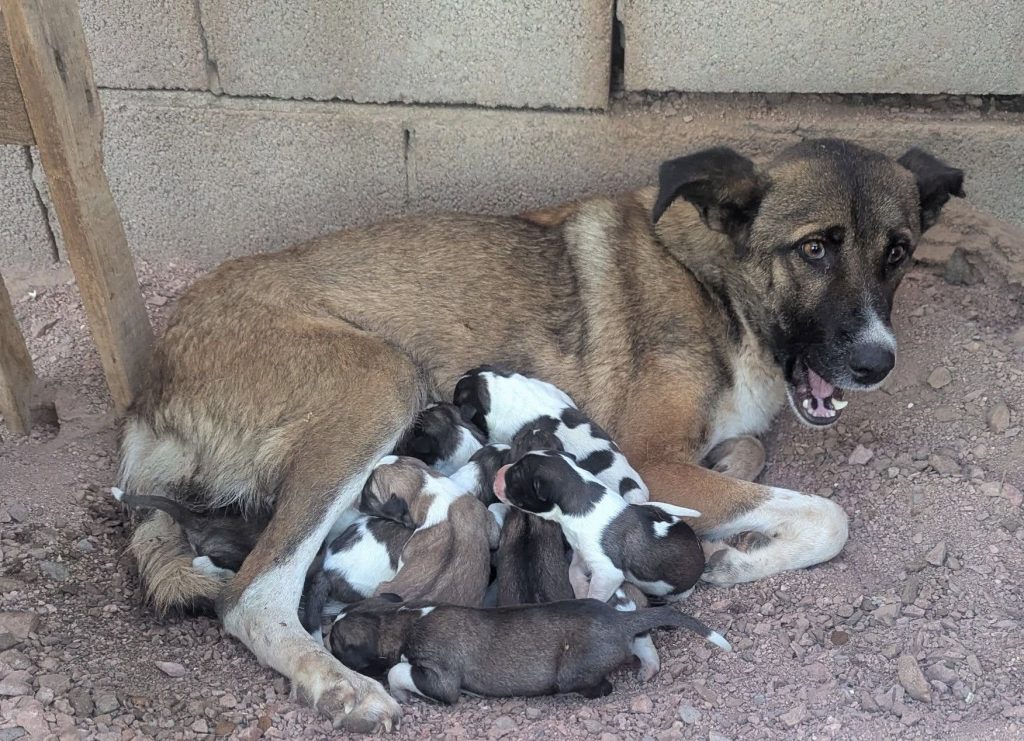
Why owned dogs? Because in Jordan, the population of street dogs is not self-sustaining at the street level (we explain why in detail in this post). It is replenished from a loosely-owned source population — dogs kept by farmers, sheep keepers, and outdoor businesses, who receive minimal care but enough shelter for their puppies to survive to weaning. Sterilizing those source-population dogs prevents puppies from ever entering the street pipeline. Sterilizing already-on-the-street dogs does not.
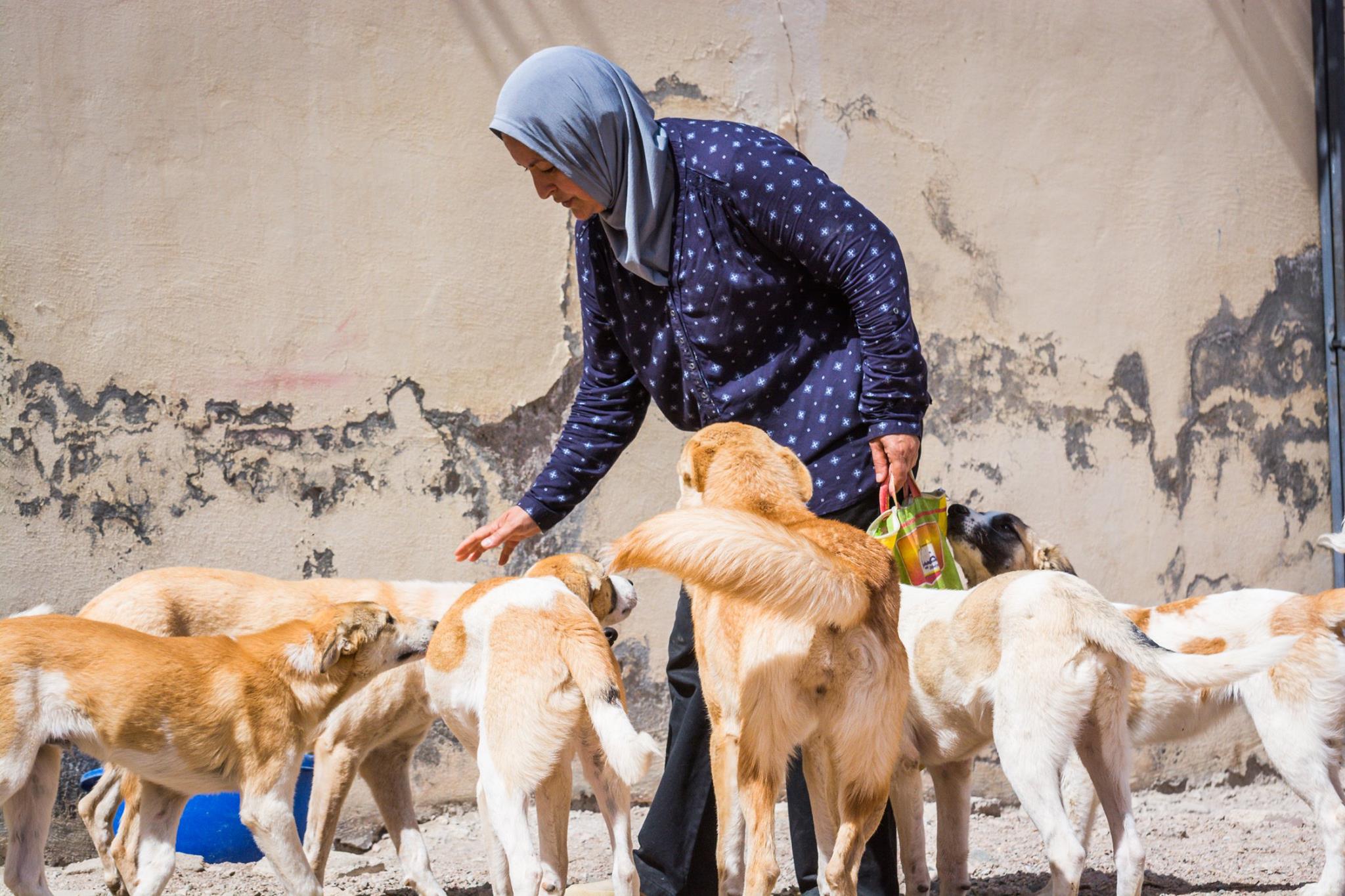
What about the individual welfare of street dogs we do encounter? When Al-Yarmouk does spay a street dog — through our shelter intake or fieldwork — we frame it honestly: it is an act of welfare for that animal and for the litters she would otherwise lose to the street. Given Jordan’s street conditions, where puppy mortality is extreme, a puppy unborn is a puppy saved. We don’t claim this strategy will reduce the overall street population. We claim it prevents suffering one dog at a time.
Why we are wary of large-scale government TNR programs. A government-led TNR program targeting Jordan’s street dogs — without the underlying evidence base — risks four bad outcomes:
- No measurable population reduction, because the program isn’t reaching the source population.
- Erosion of public trust, because visible programs that don’t deliver visible results are read as failure.
- Credibility for the culling argument, because failed sterilization programs are routinely cited by those advocating for shooting and poisoning.
- The closing of doors, because once a sterilization program has been tried and judged a failure, it becomes politically harder to design and fund a better one.
Our position is not against sterilization. It is against sterilization deployed without targeting. The risk is not that nothing happens. The risk is that the wrong thing happens, and forecloses the right thing.
If you support spay/neuter as a humane population strategy — and we do — then the most important question is not how much sterilization is being done, but which dogs are being sterilized. Get the targeting right and sterilization works. Get it wrong and you can spend years of effort with nothing to show for it.