A society can change its mind about animals and still find itself short of veterinarians equipped to deliver modern, evidence-based care. Cultural change creates the demand. Professional capacity has to meet it.
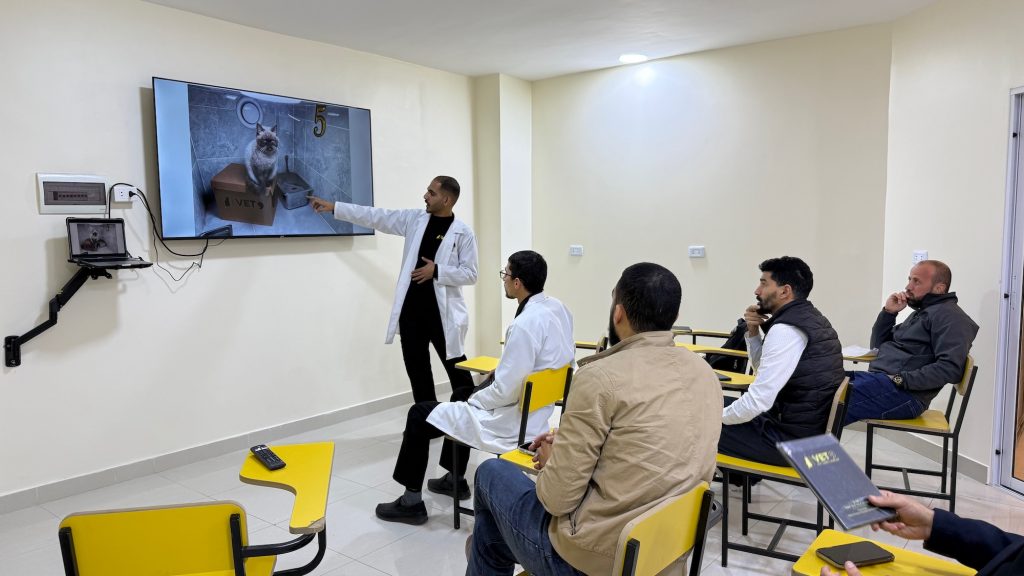
That’s why VET9 — our small animal hospital — is also a teaching hospital. Beyond serving the animals and clients who come through our doors, we are building a clinical training program for the next generation of Jordanian veterinarians.
The Flex-Track Veterinary Training Program.
We are launching the Flex-Track Veterinary Training Program, a competency-based, part-time clinical program for fifth- and sixth-year veterinary students and early-career veterinarians. It runs over 6 to 18 months at 8–20 hours per week, around participants’ existing commitments.
Trainees work through a structured scorecard of 43 clinical and professional competencies — examination, diagnostics, procedures, pharmacology, client communication, ethics, and evidence-based practice — each evaluated multiple times by direct observation. The program also includes core workshops, regular Lunch & Learn seminars with guest speakers from the US, Europe, Jordan, and international organizations, and a capstone case presentation. It aligns with international veterinary education standards, including AVMA competencies.
Why this matters. Most veterinary training in Jordan has historically focused on large animals — a legacy of agricultural priorities. Small-animal practice has lagged, and the gap between what is possible in modern small-animal medicine and what is consistently delivered is wide. Flex-Track is one practical contribution toward closing it.
Where we need help. The program runs on the participation of experienced veterinarians and educators willing to teach. We are looking for:
- Visiting veterinarians willing to spend time at VET9 — a week, a month, longer — working alongside trainees.
- Lunch & Learn speakers willing to give a one-hour talk in their area of expertise.
- Workshop contributors and curriculum collaborators with experience in competency-based veterinary training.
- Funders to support trainee stipends, travel for visiting educators, equipment, and program infrastructure.
If you are a veterinarian, educator, or welfare professional who would consider teaching, advising, or visiting — or if your organization supports veterinary capacity-building in lower-resource settings — we want to hear from you.
Building a humane Jordan for animals takes both the cultural change to want it and the professional capacity to deliver it. VET9 is where we work on the second half.