There is a part of the stray dog conversation in Jordan that international observers often raise quickly and Jordanian observers often approach more carefully: the cultural and religious dimension of how dogs are perceived.
We want to address it directly, because we believe avoiding it produces worse outcomes than engaging it thoughtfully. But we also want to be clear about what we are and are not saying.
What we are not saying. We are not saying that Islam, or Jordanian culture more broadly, is the problem. Framings of that kind appear regularly in Western media coverage of dogs in Muslim-majority countries — and they are usually reductive, often inaccurate, and almost always counterproductive. Jordanian attitudes toward dogs are shaped by many things: rural and urban experience, public health history, media, economics, family practice, and yes, religious tradition. Reducing the whole picture to a single religious explanation does not match the complexity of what actually shapes attitudes — and it provokes exactly the kind of defensive reaction that makes welfare work harder.
What we are saying. Religious and cultural framing influences how dogs are talked about and treated in Jordan. This is not unique to Jordan or to Islam — religious tradition shapes attitudes toward animals everywhere. But in Jordan specifically, certain religious framings around ritual purity and dogs are widely repeated in popular discourse, frequently in ways that are not reflective of the deeper, more nuanced traditions within Islamic scholarship itself.
The Islamic tradition contains important resources for animal welfare. The Quran describes animals as “communities like yourselves.” The Prophet Muhammad is recorded in well-known hadith traditions teaching kindness to animals — including a story of a woman forgiven for giving water to a thirsty dog, and another of a man rewarded for the same. Classical Islamic jurisprudence includes detailed obligations toward the welfare of working and stray animals. These are not fringe sources. They are mainstream within the tradition.
The gap between this tradition and contemporary popular framing is itself part of the conversation Jordan needs to have. The most effective humane education work in Muslim-majority contexts often comes from within the tradition, not against it — drawing on Islamic teachings about compassion to animals to make the case for humane treatment, rather than positioning welfare as a foreign or secular value imposed from outside.
This is delicate work, and we approach it with appropriate humility.
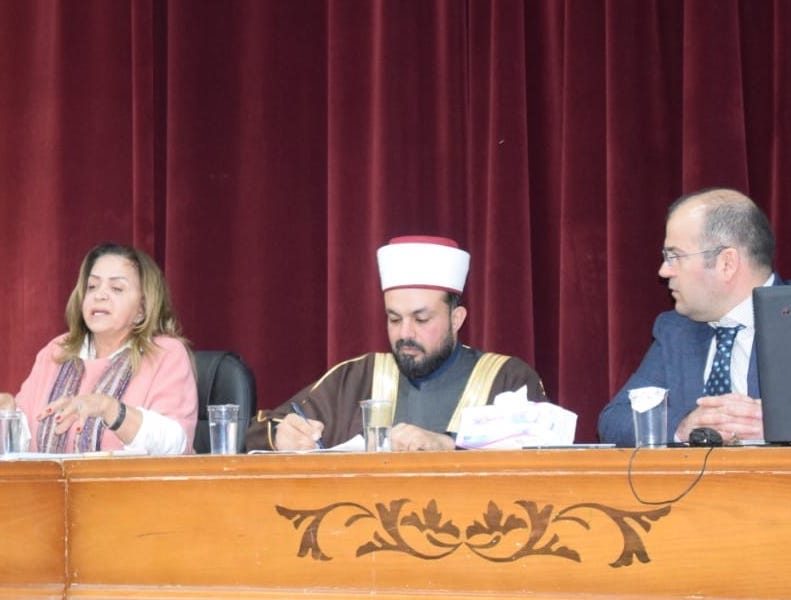
We are an animal welfare organization, not a religious institution. We do not interpret scripture, issue rulings, or claim authority on theological questions. What we do is engage seriously with the cultural and religious context our work operates in — listening before speaking, partnering with religious scholars and community leaders who are willing to engage, and recognizing that meaningful change in attitudes often happens through trusted local voices rather than through outside argument.
For international partners reading this: the cultural and religious dimension is a real part of why welfare work in Jordan looks different from welfare work in Europe or North America. It is not a barrier that defeats the work — it is a context that shapes how the work has to be done. Programs that are sensitive to this context, that engage with religious tradition rather than around it, and that center local voices, succeed where programs that ignore or oppose the cultural frame have repeatedly failed.
For Jordanian readers: we are not asking anyone to change their faith or their cultural identity. We are asking for a conversation that takes both animal welfare and religious tradition seriously, and that does not assume the two are in conflict. They aren’t, in our view, and they aren’t in the view of much of the Islamic scholarly tradition either.
This is one of the harder parts of the work. We expect to make mistakes. We will keep listening, keep learning, and keep at it.