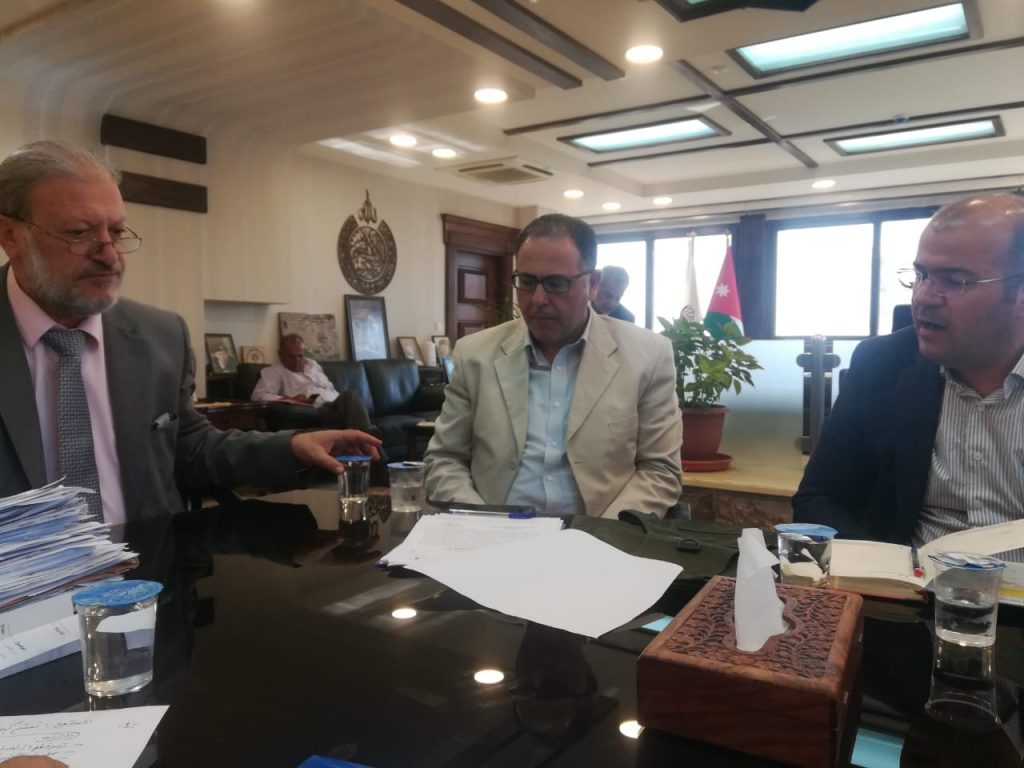
The most consequential conversations about stray dogs in Jordan don’t happen in shelters. They happen in municipality offices, ministry meetings, and community council rooms. The people in those rooms decide what gets funded, what enforcement looks like, what is tolerated, and what policy course to follow.
After spending hours and hours in those rooms, we reached a sobering conclusion: the most important obstacle to humane policy in Jordan is not money, infrastructure, or political will. It is the gap in shared understanding.
Conversations consistently break down on points that should be foundational. Our stakeholder program addresses five of them:
1. What an Animal Birth Control (ABC) program actually is. ABC is the international standard for humane management of free-roaming dogs: a structured combination of sterilization, vaccination, and (depending on context) return to community or rehoming. Many discussions about “what should be done” stall here, because the term itself is widely misunderstood.
2. Why shooting and poisoning don’t work. Mass killing has a documented track record of failure. Killed dogs are quickly replaced from surrounding source populations — the well-documented vacuum effect. Poisoning is indiscriminate, killing owned dogs, working dogs, and wildlife, with toxins that persist in the environment.
3. ABC programs have already been tried in Jordan. Jordan is not a blank slate. Localized ABC efforts have been attempted, with mixed and largely disappointing results. Decision-makers asking “could this work here?” are often unaware that some version already has — which means the right question is not whether to try ABC, but how to design it better than past attempts.
4. ABC works outside wealthy Western countries. A common objection — voiced both publicly and privately — is that ABC is a luxury only rich countries can afford. The international evidence does not support this.
5. Basic dog behavior and ecology. Dog populations grow exponentially without intervention. Free-roaming dogs are sustained largely by human food waste, not hunting. Dogs are not, as a rule, aggressive toward humans — most bite incidents involve specific, identifiable triggers. These are not contested points in the scientific literature, but they are routinely contested in Jordanian public debate.
Our work runs through workshops, briefings, and direct engagement with municipalities and ministries. It is patient. Changing one decision-maker’s understanding rarely produces a dramatic outcome. Changing twenty, sustained over years, changes what is institutionally possible.
We do not claim to have all the right answers — at least not within the specific context of Jordan. But we are working on developing those answers through research and collaboration, and we believe the conversation has to start from a shared foundation of facts.
We need partners. Subject-matter contributors willing to co-deliver workshops. Organizations with standing relationships in Jordan’s ministries who can help us reach decision-makers we don’t yet have contact with. International collaborators with experience navigating welfare policy work in similar contexts.