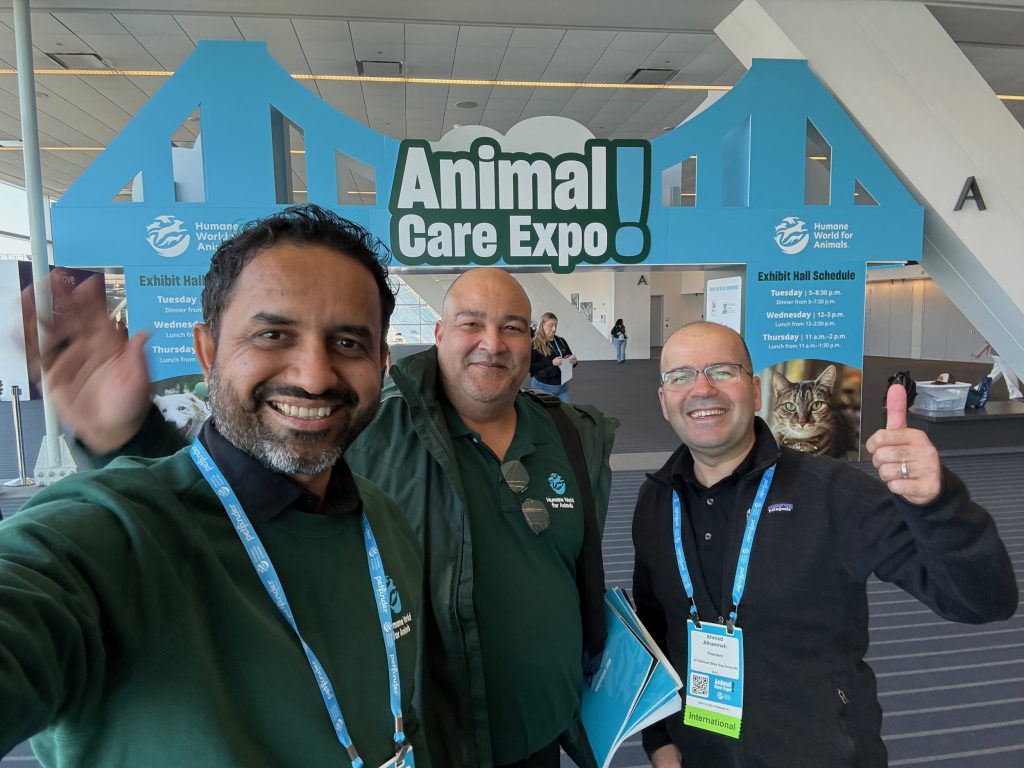
International animal welfare is in the middle of an honest conversation about how cross-border work plays out in practice. At the most recent Annual Animal Welfare Expo, the question came up repeatedly: how do international organizations support welfare work in places like Jordan, North Africa, and the broader Middle East without triggering the political backlash that has stalled or reversed similar efforts elsewhere?
We want to be direct about it, because dancing around it doesn’t help anyone.
The pushback in Jordan is real. It is common to hear in Jordanian media — from public officials, columnists, and audience commentary — explicit rejection of international involvement in domestic animal welfare. The framing varies: “interference in our affairs,” “imposing foreign values,” “lecturing us on ethics,” “post-colonial overreach.” The political potency is genuine. Programs perceived as externally imposed face headwinds that programs perceived as Jordanian-led do not. This is not a fringe sentiment. It shapes what is politically possible.
We see this as a reason for partnership, not avoidance. Al-Yarmouk is a Jordanian organization, run by Jordanians, embedded in the communities our research describes. We have the standing to do work that an external organization, however well-resourced and well-intentioned, cannot do unilaterally without triggering the very backlash everyone is trying to avoid.
International partners bring things we genuinely cannot produce on our own:
- Scientific expertise — survey methodologists, veterinary epidemiologists, statisticians
- Comparative data and methods refined across multiple country contexts
- Peer-review networks and access to publication venues
- Funding that allows methodologically rigorous work at scale
We bring things our partners cannot produce on their own:
- Direct, sustained access to the populations and communities being studied
- Linguistic and cultural fluency
- Local political legitimacy
- An operational footprint — VET9 Small Animal Hospital, our sanctuary, clinical staff, and field teams — already in place
The result, when it works, is research and intervention that neither side could achieve alone, and that doesn’t carry the political baggage that has set back welfare work in similar contexts.
If your organization is thinking carefully about how to support animal welfare in places like Jordan without unintended consequences — and we know many of you are — we would value the conversation. Co-authored studies, joint grant applications, methodological collaboration, and longer-term partnerships are all on the table.
We are not asking for rescue. We are offering partnership.