To understand the sudden intensification of public hostility toward stray dogs, we analyzed every Arabic-language online article we could find on the issue between 2010 and 2022 — 247 articles in total.
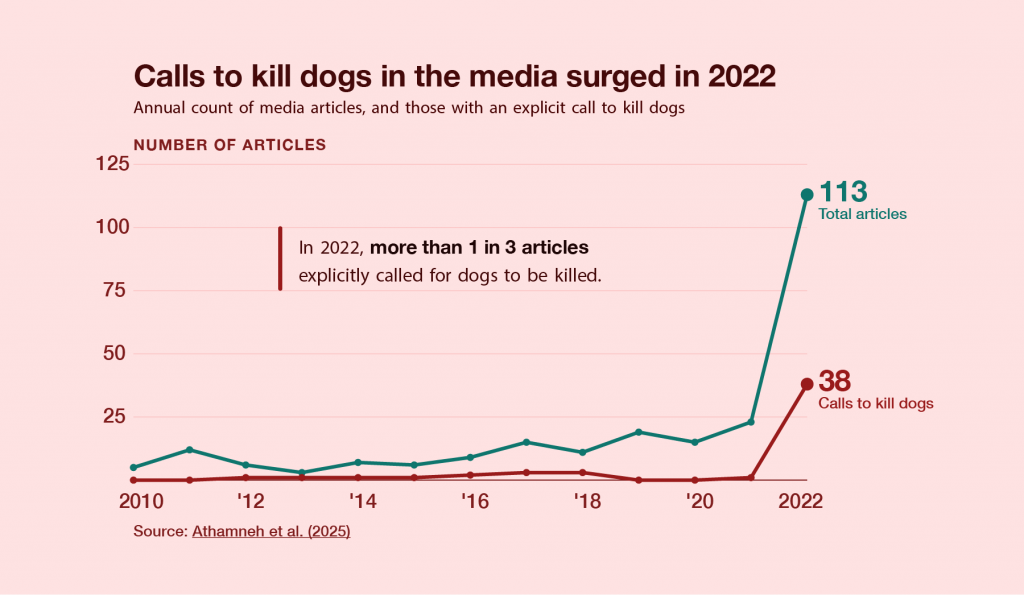
The numbers are stark. Across the full thirteen-year period, 85% of articles expressed clearly negative attitudes toward dogs. 8% were neutral. Only 7% were positive. Coverage volume was relatively flat for most of the decade, then surged: the number of articles published in 2022 was 391% higher than in 2021. Within 2022 itself, the pattern is even more concentrated — volume was low through August, spiked sharply in September, and remained elevated through year-end.
Calls to kill dogs followed the same curve. We found a statistically significant correlation between the total number of articles published and the number containing an explicit call to kill dogs (Spearman’s ρ = 0.627, p = 0.022). And these calls did not come only from members of the public. They came from public officials — despite the fact that the indiscriminate killing of stray dogs has been outlawed in Jordan, a position reasserted by the Ministry of Local Administration in 2017.
An independent media watchdog, the Jordanian Media Credibility Monitor (AKEED), reviewed the March–September 2022 coverage and documented extensive journalistic violations: fabricated incidents, recycled stories from earlier years, and images and videos sourced from other countries and presented as Jordanian. Much of the most viral content turned out, on inspection, not to be true.
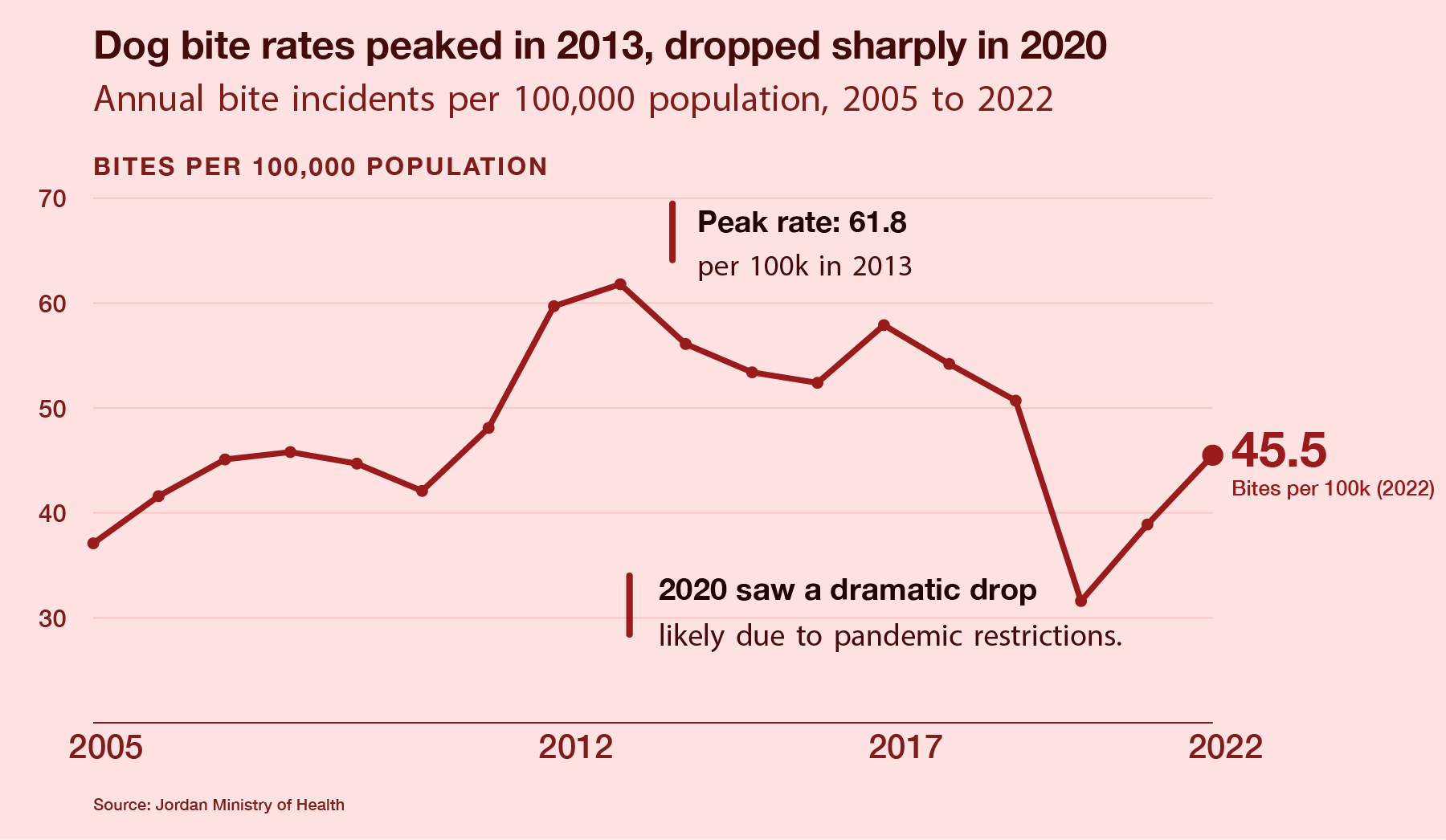
None of this means the underlying concerns are illegitimate. Dog bites happen. They can be serious. People are right to expect public safety. But the media record shows us something specific and important: the sudden intensification of outrage in 2022 was a media event, not a response to a documented change in conditions on the ground. Recognizing that distinction is the first step toward a policy debate that isn’t being driven by panic.